 HUATAO Rolls
Rubber Covered Roll
Provide the core drawing, cover hardness, chemical exposure and operating conditions for review.
Request a quote for this product
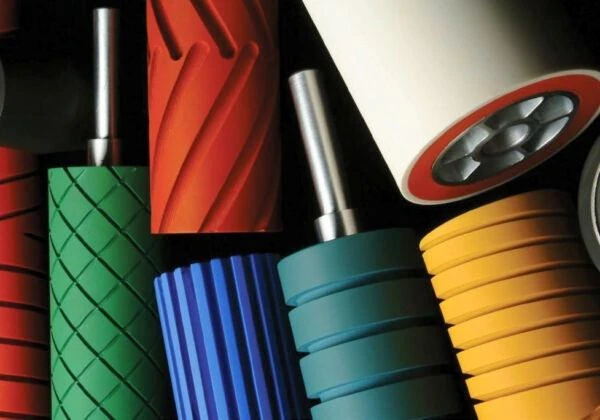
Rubber-covered rolls with different surface profiles
Product description
A rubber-covered roll has an elastomer working surface over a roll core. When specifying the cover, identify the contact material, required hardness, operating temperature and any process or cleaning chemicals. For a replacement or recovering job, share the core drawing and describe how the existing cover wears or fails. For a replacement, include the existing roll drawing and describe where the cover shows wear.
Selection and fit
Check cover material and hardness against loading, temperature, the contact substrate and exposure to process liquids or cleaning agents.
Installation and machine interfaces
For recovering or replacement, supply the core drawing and confirm journal dimensions, cover thickness and surface profile.
Specification notes
| Project review | Provide the core drawing, cover hardness, chemical exposure and operating conditions for review. |
|---|
Confirm the applicable dimensions, operating limits and acceptance criteria against the approved drawing for your configuration.
Drawings and inspection documents
Confirm the applicable drawing revision and inspection records when requesting a quote.
Roll selection and purchasing FAQ · Prepare a technical inquiry
Applications
Selection guides
Process and machine position
Related products
Procurement path
- Review drawing and inspection requirements
- How to specify an industrial roll
- Covered roll selection
- Review supply and inspection coordination
- Prepare a replacement roll RFQ
- Go to the inquiry form
Compare product roles or configurations
- Polyurethane Roll — Compare the actual cover material, hardness, temperature and chemical exposure before specifying the cover.
Prepare your inquiry
Core drawing, required cover hardness, process media, temperature and observed wear.