 HUATAO Rolls
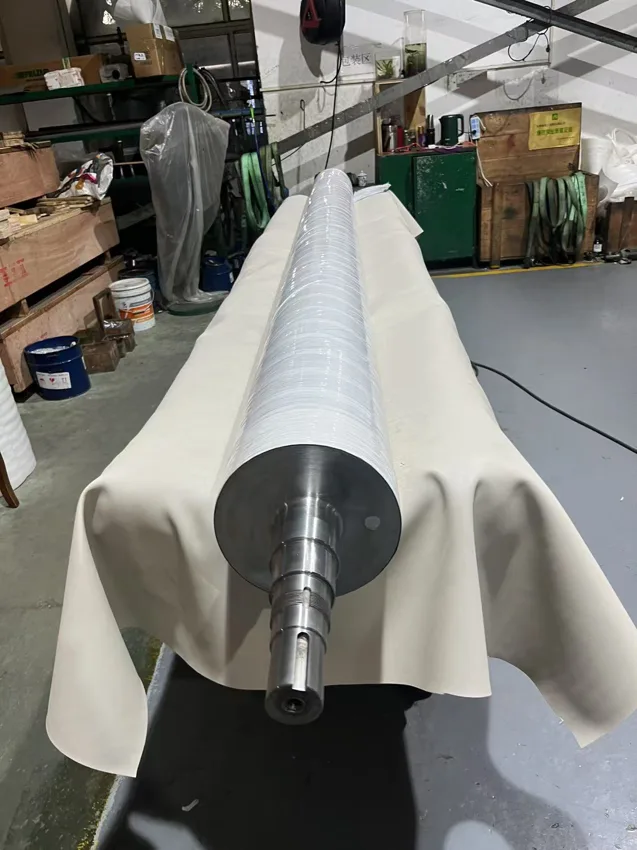
Ceramic Anilox Roll
Meters ink or coating. Confirm line count, cell volume and units, engraving pattern and press fit.
Request a quote for this product
Product description
Description of Anilox Rolls
Anilox roll is a laser-engraved, ceramic-coated metal cylinder that transfers a precise amount of ink, adhesive, or coating to a printing plate or directly to a substrate. The surface features tiny, cup-shaped cells that hold and deliver a measured volume of liquid to the printing process, ensuring consistent and uniform results. The line count (cells per inch) and cell volume are key specifications that determine the amount of liquid transferred and are chosen based on the printing application and substrate.
How Anilox Rolls Work
Ink/liquid transfer: Anilox roll is the "heart of the printing press/machine" because it precisely delivers ink, adhesive, or other liquids to the printing plate.
Cell structure: The surface of the anilox roll is etched with a pattern of tiny, engraved cells.
Controlled volume: These cells have a fixed volume and are designed to hold a precise amount of liquid or ink, which is then transferred to the printing plate.
Consistency: The structure of the anilox roll ensures consistent liquid or ink transfer, which is essential for high-quality and repeatable printing results.
Anilox Roll Specifications
Line Count (LPI): This measures the number of cells per linear inch or centimeter on the anilox roll's surface.
Cell Volume: The volume of the cells, measured in BCM (Billionths of a Cubic Meter), dictates the total amount of ink or liquid the roll can hold.
Engraving Geometry: Cells can be various shapes, such as hexagonal, quadrangular, or tri-helical, or open-channel designs, which affect ink transfer.
Anilox Roll Application
Flexographic Printing: The primary application for printing ink distribution onto printing plates.
Coating and Laminating: Applying precise layers of adhesives or coatings in manufacturing processes.
Corrugated Board Production: For gluing and coating during the manufacturing of corrugated sheets.
Anilox Roll Surface Treatment
Perfect Coating: Advanced TriplexPro-210 three-cathode plasma spraying system imported from Switzerland, carefully selected pure imported Cr2O3 ceramic powder, It solidifies into a denser, harder, more wear-resistant and more suitable ceramic coating for laser engraving.
Precision engraving: We have introduced the new generation of fiber laser system and the new version of engraving software from Germany to engrave various mesh holes with finer quality, higher line count and greater ink carrying capacity, meeting any of your demands for ceramic anilox rolls.
Plasma spraying ceramic onto roller surface
Laser engraving on the roller surface
Grinding roller surface
Selection and fit
Compare line count, cell volume and cell geometry against the ink or coating, substrate and target transfer amount.
Installation and machine interfaces
Check the roll drawing for face width, journals and mounting interfaces. Identify the press position and the existing roll or sleeve arrangement.
Specification notes
| Surface type | Engraved ceramic |
|---|---|
| Review inputs | Press model, line count, cell volume and engraving requirements |
Confirm the applicable dimensions, operating limits and acceptance criteria against the approved drawing for your configuration.
Drawings and inspection documents
Confirm the applicable drawing revision and inspection records when requesting a quote.
Roll selection and purchasing FAQ · Prepare a technical inquiry
Applications
Technical resources
Selection guides
Process and machine position
Related products
Procurement path
- Review drawing and inspection requirements
- Anilox roll selection and maintenance questions
- Ink transfer and impression
- Review supply and inspection coordination
- Prepare a replacement roll RFQ
- Go to the inquiry form
Compare product roles or configurations
- Central Impression Drum — Identify the press function: the anilox roll meters ink or coating, while the impression drum supports the web.
Prepare your inquiry
Press and roll drawing, ink or coating, substrate, current cell count and volume, and target transfer.