 HUATAO Rolls
Uneven Corona Treatment on BOPP Film: What to Check Before Replacing the Backing Roll
Map uneven corona treatment across BOPP film, check the treater setup, and define backing-roll specifications and acceptance criteria before ordering.
Before replacing a corona treater backing roll, determine whether the treatment variation repeats across the web under controlled conditions. Check treatment power, active electrode width, air gap and web contact before deciding whether the backing roll needs repair or replacement.
Map the treatment variation across the web
Record the film grade, thickness, treated side, line speed, active electrode width and displayed power or dose. At steady speed, use the plant's agreed wetting-tension test to sample fixed cross-web positions, including points near both edges and the center of the working width. Keep the sampling interval after treatment consistent and repeat the profile on a second sample under the same conditions.
Note whether low readings stay at the same cross-web position, extend across the entire treated width or recur along the machine direction. A fixed band gives maintenance a position to compare with the electrode and web path. A repeat along the web gives the team an interval to compare with rotating components. Either pattern is a starting point for inspection.
Check the treatment setup and roll condition
| Check | What to verify |
|---|---|
| Power and treatment width | Compare displayed output and active electrode width with the setup approved for the film grade and speed. Confirm which sides are being treated. |
| Electrode and air gap | Check electrode condition and whether the gap is consistent across the working width using the procedure and limits for the installed station. |
| Web wrap and nip | Verify threading, wrap and web contact at the backing roll. Where a separate nip roll is fitted, check its condition and the specified nip setup. |
| Backing roll | Inspect the working face for deposits, damage or wear. Check runout and alignment against the agreed limits and record how the measurements were taken. |
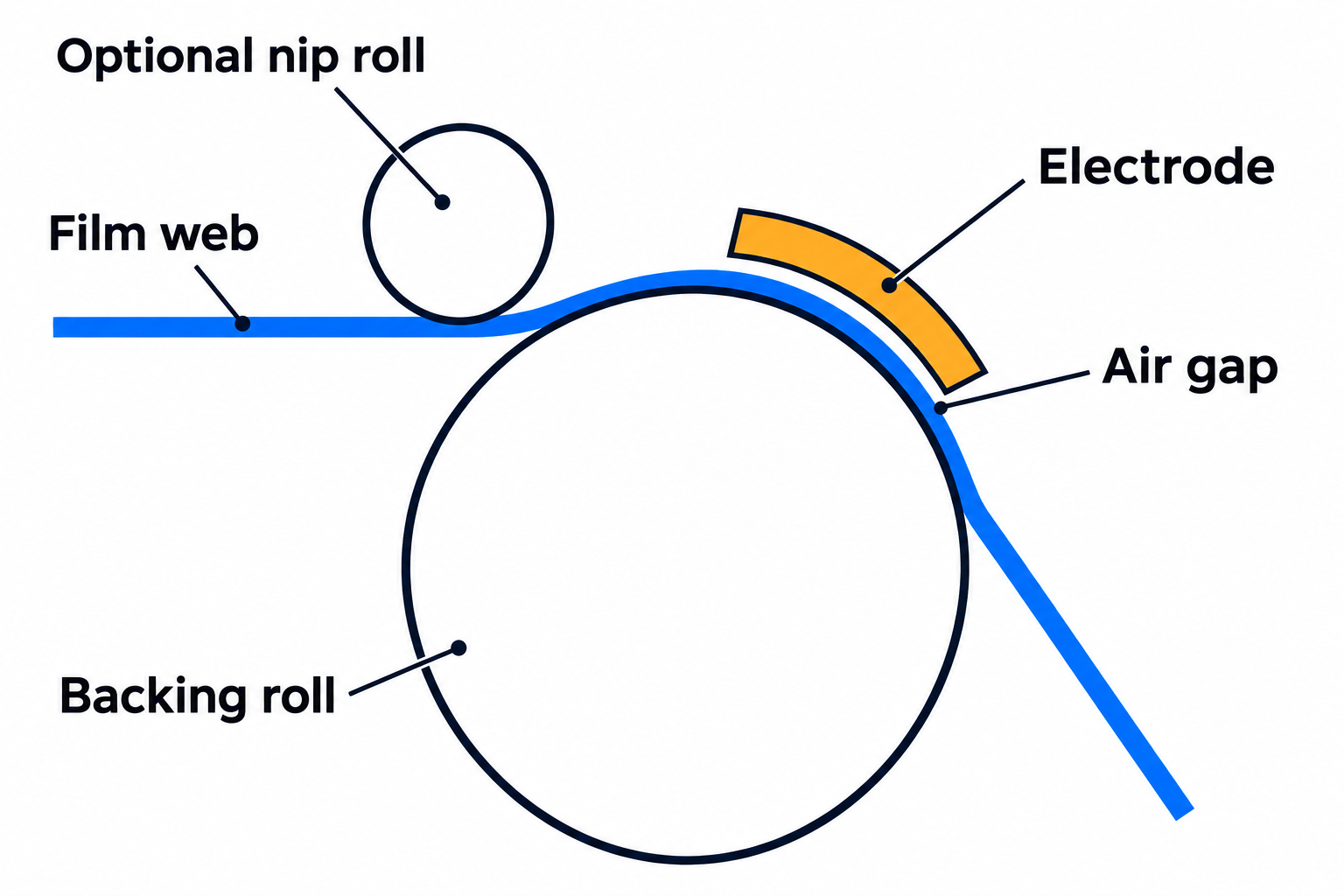
Qualified personnel should follow the equipment manufacturer's procedure and the plant's isolation requirements for electrical and mechanical inspections. Review the inspection findings against the treatment profile before approving replacement.
Specify the replacement by station and roll position
Send the supplier the treater model, backing-roll tag, current drawing revision and operating conditions. Confirm the face length, overall length, journal and bearing interfaces, and drive arrangement. Specify the required surface construction and electrical acceptance checks for that station, including covering material and thickness where applicable. For a cooled roll, include connection details, service conditions and the required cooling circuit tests. Identify dimensions measured on a used roll so they can be checked against the design requirements.
Agree on inspection and the production trial
Before ordering, agree on inspection criteria for dimensions, runout, surface condition and any electrical or cooling tests specified for the assembly. Define the datum, supports and measurement positions for runout. Record the test conditions and limits on the purchase specification so the supplier's report can be checked at receiving inspection.
For the production trial, repeat the cross-web profile with a representative film grade at the agreed line speed. Document the treated side, power, active width, web path and sampling conditions so the before-and-after profiles can be compared. Set the required treatment range and allowable cross-web variation with the plant's quality team before the trial. Keep the receiving report and trial profile with the roll record.
Sources
- Vetaphone equipment FAQ
- Determining Correct Watt Density (Material Factor)
- Vetaphone extrusion equipment brochure
Related products
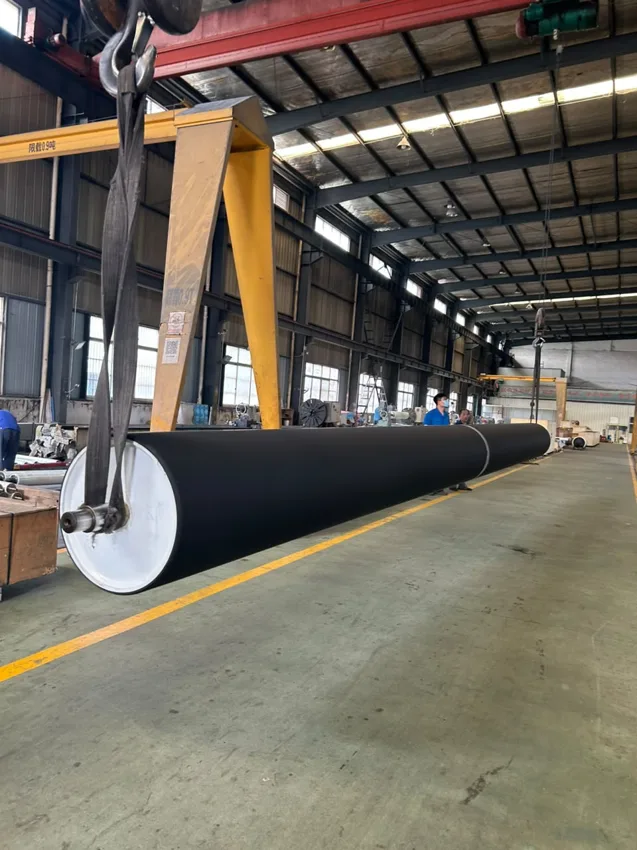 Corona Nip RollHolds the film against the treatment roll. Check nip geometry, pressure and surface requirements.
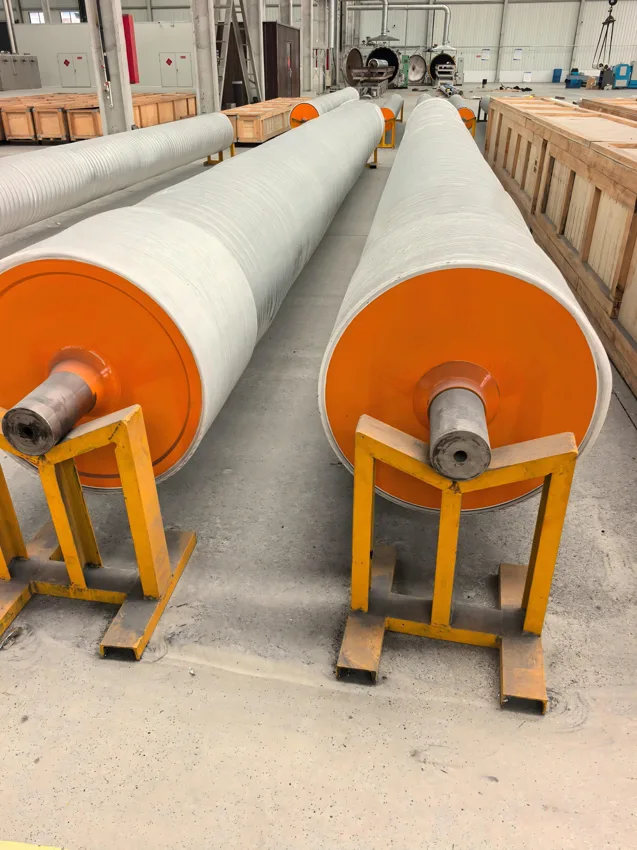 Corona Treater RollSupports web surface treatment before printing or coating. Confirm the treatment unit, cover and electrical requirements.